Understanding Human Readiness Levels
Tristan Plank
Director of Product Design | Human Factors Practitioner

Technology programs have been using the Technology Readiness Level (TRL) scale since it was formalized in 1989 (although an early TRL system was invented and used by NASA in the 1970s). TRLs provide acquisition programs with a common language for answering the critical question “How mature is our technology?” For example, a system rated TRL 8 has been tested and qualified while a component rated TRL 4 has only been validated in a lab. The scale works because it provides common definitions and everyone knows what the ratings mean.
However, a high TRL does not by itself establish whether people can operate and maintain the resulting system safely and effectively. As human factors professionals we make the argument that TRL answers only half the question. Problems can remain when technology development has not adequately considered the intended users, their tasks, and their working conditions.
Consider a few hypothetical examples. An interface works on the bench in a lab but cannot be operated with gloves on a cold day, or becomes hard to read outside in sunlight. A critical alert is buried three menus deep. A maintenance task requires an angled reach some intended users cannot make. Each reveals a gap between technical function and practical use.
Fortunately, a Human Readiness Level (HRL) standard has now been implemented to take end users into consideration within the product and system design lifecycle. The Human Factors and Ergonomics Society (HFES) published the HRL standard in 2021, following approval by the American National Standards Institute (ANSI). The Department of Defense (DoD) adopted that edition in 2025 for acquisition and major defense programs.
What Are Human Readiness Levels?
ANSI/HFES 400-2021 defines Human Readiness Levels using a nine-level scale for evaluating a technology or system's readiness for safe and effective human use. The scale was deliberately designed to complement and parallel TRL assessment within systems engineering and human systems integration (HSI) so the two can be reported together throughout a program's lifecycle.
The nine levels track the maturation of the human dimension of a system across three familiar phases:
Phase 1: Basic research and development (HRL 1, 2, and 3): The work progresses from understanding human characteristics and performance (HRL 1), through developing human-centered concepts and guidelines (HRL 2), to establishing human-centered requirements (HRL 3).
Phase 2: Technology demonstration (HRL 4, 5, and 6): Design concepts undergo modeling, trade studies, and part-task testing (HRL 4). Prototypes are evaluated in mission-relevant simulations (HRL 5), followed by demonstration of a mature human-systems design in a relevant high-fidelity simulation or actual environment (HRL 6).
Phase 3: Production and deployment (HRL 7‚ 8, and 9): The design is tested with representative users in an operational environment (HRL 7). Human performance is verified and the design approved using the completed system (HRL 8). Operational use includes continued monitoring of human-system performance (HRL 9).
Just as a program wouldn't field a TRL 5 system, the HRL scale gives decision-makers a defensible way to recognize when a system's human readiness is lagging, before that gap becomes a mishap report.
Why HRLs Matter
Human factors challenges can emerge in the relationship between the design, the task, and the conditions of use. The case for measuring human readiness can be unfortunately easily found in decades of mishap data. For example, human error is implicated in over half of all aircraft accidents. Human error in these cases is typically not due to an operator being careless, rather the error often comes from a predictable human response to a design that never accounted for how people actually perceive, decide, and act under stress.
The economics are also compelling. Fixing a human systems problem discovered at operational test costs orders of magnitude more than addressing issues while requirements and designs can still change. The Department of Defense has taken notice. In August 2025, the DoD formally adopted ANSI/HFES 400-2021, giving acquisition programs a standardized metric for human systems integration maturity. Human readiness is now a reportable dimension of program health.
Comparing HRL and TRL can expose uneven progress: an HRL that trails the TRL by two or more levels is a recognized flag for elevated program risk. When identified, gaps such as these should prompt a review of the unfinished human systems work and the resources needed to address them. The HRL/TRL comparison is not a universal pass/fail threshold, but provides an early, quantifiable warning that a program is building a system for end users who will not be ready to use it.
Implementing HRLs
Building a credible HRL assessment requires evidence: documented human-centered requirements, task analyses, workload and performance data, usability test results, and evaluations conducted in mission-relevant conditions. The standard's supplementary criteria define what "done" looks like at each level, and assessments should be performed by qualified human factors professionals who can judge whether the evidence actually supports the rating.
Currently, while most engineering organizations are staffed and prepared to generate TRL evidence, far fewer have the in-house human factors expertise to perform the work needed to create necessary HRL evidence. This includes designing the right studies and evaluations, working with representative users, and translating the results into ratings that stand up to scrutiny at milestone reviews.
HF Designworks Can Help
For more than 20 years, HF Designworks has done exactly this kind of work for defense, aviation, medical, commercial, and other government programs and agencies. Our capabilities include human systems integration, cognitive task analysis, workload and performance modeling, usability testing and system evaluation. These disciplines help programs develop and evaluate the evidence supporting an HRL assessment, and we have baked these best practices into our work long before HRL was formalized by the DoD.
If your program is preparing for the DoD's adoption of HRLs or you simply want to know whether your system is ready for its intended end users, we welcome the conversation. Contact us to discuss your program needs.
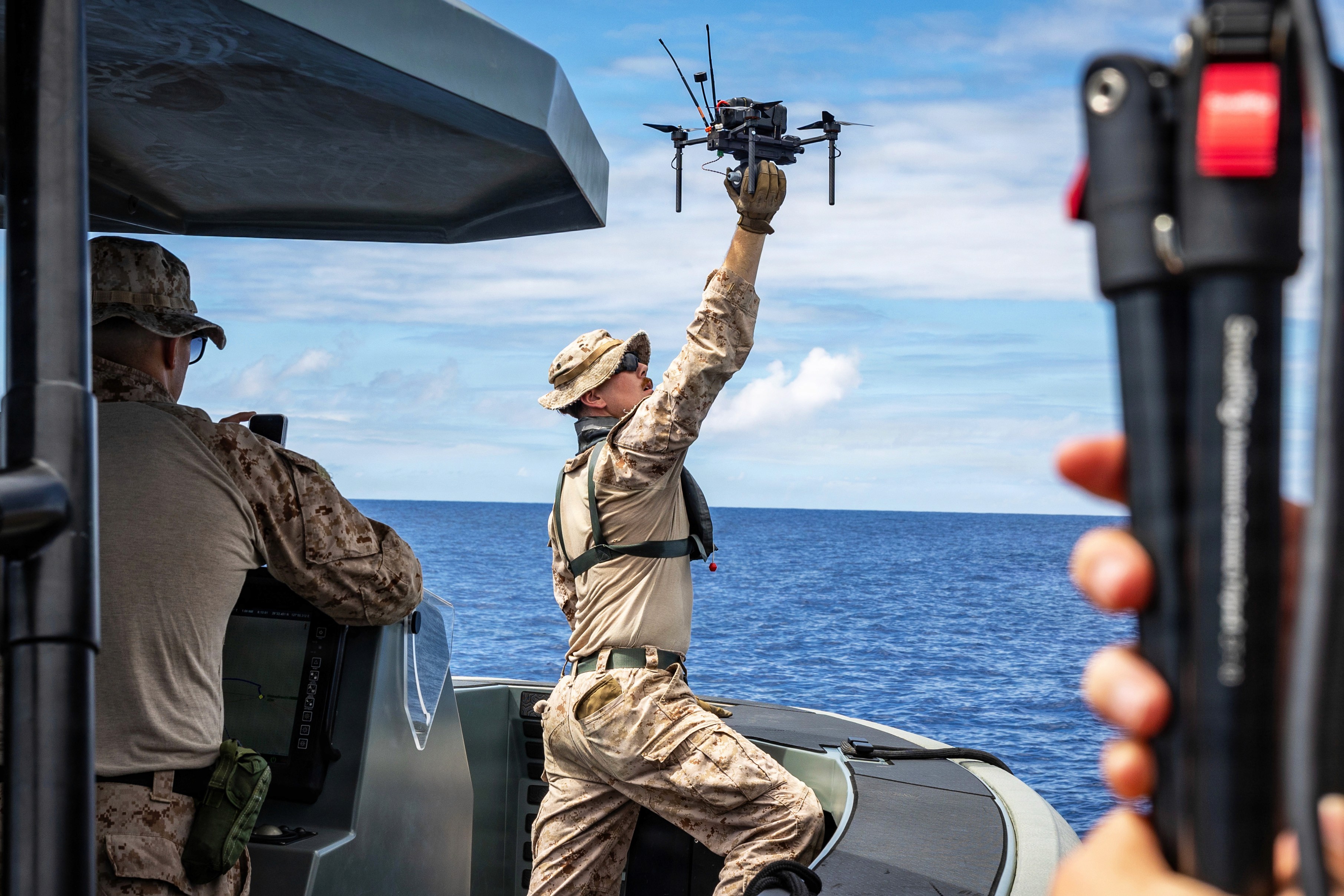
Image credit https://www.marines.mil/Photos/igphoto/2003982807/
Keep Reading



// SAY HELLO
Contact
HF Designworks, Inc.
PO Box 19911
Boulder, CO 80308
(720) 362-7066